Family Locator App

Family Locator App for iOS
Family Locator App

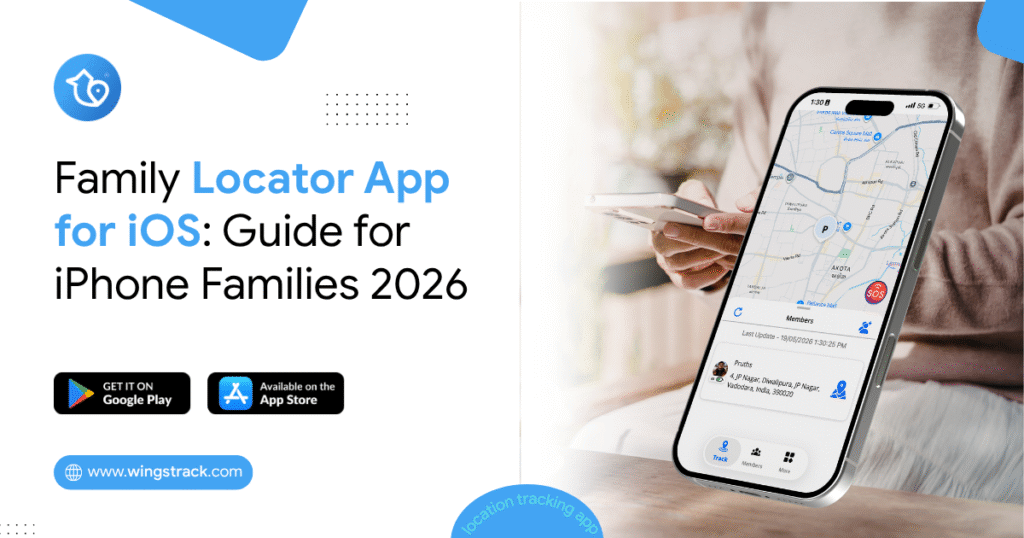
Family Locator App for iOS: Guide for iPhone Families 2026

What actually works on iPhone, what Apple already gives you for free, and what to add when your family doesn’t fit neatly inside one ecosystem. The iPhone Family That Isn’t Quite All-iPhone A mother in San Diego has three children. Two have iPhones,  hand-me-downs from her and her husband as they upgraded over the years. The youngest just got his first phone for his eleventh birthday, and because the family found a better deal on a refurbished Android device, he’s the outlier. She assumed Apple’s built-in tools would cover her family’s location-sharing needs. They cover two-thirds of it. Her youngest son, the one who just started walking to a friend’s house a few blocks away, the one whose location she actually wants to keep closest tabs on during this transitional independence phase, is invisible to her Find My family circle. This situation is more common than most iPhone-focused guides acknowledge. “iOS family” rarely means “100% iOS family” once you account for hand-me-down devices, budget purchases, a teenager’s specific brand preference, or a spouse whose work-issued phone is Android. The question is “What’s the best family locator app for iPhone?” usually carries an unstated second half: And what happens when not everyone in my family has one? 5 Key Takeaways About Family Locator App For IOS Apple’s Find My is the strongest free option for all-Apple households. It’s accurate, battery-efficient, and built directly into iOS — no separate download, no account creation beyond your existing Apple ID. For families where every device is an iPhone, it remains hard to beat on cost and integration. The moment one family member uses Android, Find My stops being a family solution. This isn’t a minor inconvenience; it’s a complete exclusion. Find My cannot include Android devices under any configuration. Families need to know this before building their entire safety plan around it. “Available on iPhone” and “built for iPhone families” are different standards. Many third-party apps technically run on iOS but were designed primarily for Android markets, resulting in interface inconsistencies, delayed updates, or features that work better on the Android version. Test the actual iOS experience before committing, not just the app store listing. Real-time accuracy varies more by app architecture than by device. An iPhone running a well-optimized location app and one running a poorly built one will show meaningfully different update frequencies and battery impact, even though the underlying iOS GPS hardware is identical. The app matters as much as the platform. A dedicated cross-platform family locator app fills the gap Apple’s tools leave open. For the San Diego mother and millions of families like her, a tool like Wings Track extends the same iOS reliability to Android family members closing the exact gap that makes “family locator app for iPhone” an incomplete question for most real households. What Is the Best Family Locator App for iPhone? The honest answer depends on one variable above all others: does your entire family use iPhones, or does it not? If every device in your family is an iPhone: Apple’s Find My, accessed through Family Sharing, is genuinely the best option. It costs nothing beyond your existing Apple devices. It’s integrated at the operating system level, which means better battery efficiency and more reliable performance than third-party apps running as background processes. Setup takes minutes through the Family Sharing settings already present on every iPhone. Geofence alerts notify when a family member arrives at or leaves a saved location work consistently. For an all-Apple household, no third-party app improves meaningfully on what’s already built in. If your family includes even one Android device: Find My is immediately disqualified as a complete solution, regardless of how many iPhones the rest of your family uses. This is the scenario the rest of this guide focuses on, because it describes more families than the all-Apple scenario does. In this case, the best family locator app for iPhone is one that runs natively and reliably on iOS while extending equivalent functionality to the Android devices in your circle. Wings Track is built around this exact requirement the iPhone experience is full-featured and performs at the same standard Apple users expect from native tools, while Android family members receive the same location accuracy, update frequency, and alert reliability rather than a degraded secondary experience. The test worth running before you commit: install the app on an iPhone and an Android device side by side. Compare location accuracy, how quickly arrival alerts fire, and how much each device’s battery drains over a day of normal use. The answer to “best for iPhone” should hold up under that comparison, not just look good in an app store screenshot. Wings Track vs. Life360: Side-by-Side for iPhone Families Feature Wings Track Life360 iOS performance and integration ✅ Full-featured, optimized for iOS ✅ Full-featured, well-established on iOS Real-time location (free tier) ✅ Included ❌ Restricted — requires paid plan Works with Android family members ✅ Full parity, equal experience ✅ Full parity, equal experience Arrival / departure alerts (free) ✅ Included ❌ Limited on free plan Driving behavior monitoring ❌ Not included ✅ Available (paid tiers) Battery impact on iPhone ✅ Optimized, low impact ⚠️ Moderate, varies by iOS version International / cross-border tracking ✅ Full function ✅ Available, feature-dependent on tier Location history access ✅ Free tier included ❌ Paid tier required Subscription cost Free for core features $8–$30/month depending on plan Privacy practices ✅ Family-first, no data-broker history ⚠️ Documented past data sales (policy since updated) Best suited for iPhone families with mixed-device members, cost-conscious households Families prioritizing teen driving safety features, willing to pay for them For most iPhone families whose primary need is reliable, free, cross-platform location sharing, Wings Track delivers more of the core function without a subscription wall. For families specifically wanting driving behavior alerts for a new teen driver, Life360’s paid tier offers a feature set Wings Track doesn’t currently include worth the cost if that’s your specific concern. How to Locate Family Through iPhone If
Phone Tracking Apps
Family Locator App

Do Phone Tracking Apps Work?

The Gap Between the Promise and the Reality A mother in Houston downloaded three different phone tracking apps over the course of eighteen months. The first one drained her daughter’s phone battery so aggressively that the phone was dead by 3 PM every school day — which was worse than no tracking at all, because a dead phone means no communication either. The second app showed her daughter’s location as a static dot that hadn’t updated in forty minutes, which turned out to be the app’s standard behavior on the free tier rather than a malfunction. The third one worked exactly as advertised. Spoiler: Yes — but only when you choose the right one for the right reason and set it up the right way. She’s still using the third one. Her experience isn’t unusual. It’s the majority experience. Parents who’ve heard that phone tracking apps work, downloaded the first result that appeared, and discovered the gap between what was marketed and what was delivered make up a significant portion of negative app store reviews in this entire category. The honest answer to “do phone tracking apps work” is: yes, they work — when they’re built correctly, configured properly, and matched to the specific use case they were designed for. The qualifications on that sentence matter as much as the yes. This guide breaks down what location tracking apps actually are, how they function technically, which families they genuinely serve, and the specific questions that separate reliable tools from unreliable ones. If you’ve been skeptical because a previous app disappointed you, this is the context that explains why — and what to look for instead. If you’re evaluating your first location app, this is the information you need before you download anything. 5 Key Takeaways About Family Locator Apps Before going deeper into the technical and comparative details, here are the five things worth knowing above everything else. The Technology Is Proven — The Implementation Varies Enormously GPS technology is mature, global, and reliable. The satellites that locate your phone don’t care which app is using them or which country you’re in. What varies is how different apps use that data — how frequently they update location, how they manage battery consumption while doing it, how they handle signal gaps, and whether they transmit information to your family circle reliably. Asking “do tracking apps work” is like asking “do cars work.” The technology works. Specific models are better or worse than others. Real-Time and Periodic Updates Are Not the Same Thing Many apps use “real-time” in their marketing to describe location that updates every ten to fifteen minutes. This is not real-time in any meaningful sense for family safety purposes. Genuine real-time location sharing updates every thirty to sixty seconds during movement — frequently enough that you can watch a family member commuting, confirm a child is on the correct route home, or notice immediately if someone stops moving unexpectedly. Before trusting any app with your family’s safety, test its actual update frequency during active movement, not just its marketing description. Free Doesn’t Mean Useless — But It Rarely Means Everything The best family location apps offer genuine core functionality — real-time location, arrival and departure alerts, family circle management — without mandatory payment. Wings Track operates this way. Several major competitors restrict the most useful features to paid tiers, which means the free experience is designed to frustrate you into upgrading rather than to actually serve your family’s safety needs. Knowing which model an app uses before investing setup time across your whole family saves significant frustration. Consent Determines Whether the App Works Long-Term A phone tracking app installed without a family member’s knowledge will be disabled, worked around, or will generate the kind of trust damage that outlasts whatever safety benefit it provided. The apps that continue working months after download — that become integrated into family life rather than resented — are universally the ones set up with everyone’s awareness and ideally with mutual visibility. The technology doesn’t create the relationship dynamic. The conversation before installation does. Cross-Platform Compatibility Is Non-Negotiable for Most Families If your family includes both iPhone and Android users — which statistically describes the majority of households — a location app that works on only one platform leaves family members out of the safety circle entirely. This seems obvious. It’s also the source of more failed family tracking setups than any other single factor. Verify cross-platform function before configuration, not after. What Are Location Tracking Apps? A location tracking app is a mobile application that uses a combination of GPS satellite data, cellular network positioning, and Wi-Fi triangulation to determine a device’s physical location and share that information with defined contacts or a family group. The GPS layer is the foundation. Satellites orbiting Earth transmit timing signals that a device’s GPS receiver uses to calculate its precise position. This works globally — the same satellite network covers Houston, Hyderabad, Helsinki, and every point between them. No subscription, no geographic restriction. The cellular and Wi-Fi layers fill the gaps. GPS accuracy degrades indoors, in dense urban environments, and in areas with limited sky visibility. Cellular tower triangulation and Wi-Fi positioning maintain location awareness in conditions where GPS alone would be insufficient — inside school buildings, in parking garages, on underground transit systems. The app layer transmits this location data to a server and then to the devices of other family circle members. This is where battery management becomes critical. An app that polls GPS continuously, at maximum frequency, regardless of whether the device is stationary or moving, will drain a battery significantly faster than one that uses motion detection to adjust polling frequency intelligently — high frequency when moving, reduced frequency when stationary. The result, in a well-built app: a family member’s location appears on a shared map, updates regularly during movement, sends alert notifications when defined boundaries are crossed, and does all of this without reducing a child’s phone to 15% battery

Track Real-Time Family Location
Family Locator App

What’s the Best App to Track My Family’s Location in Real-Time?

The Question Behind the Question Nobody searches for “best app to track my family’s location in real-time” because they’re curious about technology. They searched for it because something specific happened. A teenager didn’t come home when they said they would. A spouse’s commute ran forty-five minutes long with no message. A child walked to school alone for the first time, and the silence afterward felt louder than expected. An elderly parent lives alone and doesn’t always answer the phone. The anxiety that drives the search is real. The problem is that the search itself returns results optimized for advertising revenue rather than honest guidance — and a parent making a rushed decision based on app store rankings ends up with a tool that either doesn’t work for their specific family configuration, throttles the critical features behind a subscription, or handles their family’s location data in ways they’d object to if they’d read the fine print. This guide does something different. It answers the real question — which app actually delivers reliable real-time family location sharing for your specific situation — with the specificity that question deserves. Not a ranked list of popular apps. An honest framework for matching the right tool to the actual family using it. What “Real-Time” Actually Means And Why It Matters More Than You Think Before evaluating any app, establish what real-time means in practice. Because the app store definitions are inconsistent to the point of being misleading. A location that updates every thirty seconds while a family member is moving qualifies as real-time for practical safety purposes. You can watch a child walking home and confirm they’re on the right route. You can see a spouse’s commute progressing normally. You can confirm a teenager is where they said they’d be. A location that updates every ten to fifteen minutes is not real-time. It’s a delayed snapshot—useful for general awareness, but not useful for the moments when the information actually matters. If your teenager is driving and something goes wrong, a location that’s fourteen minutes old doesn’t help you understand where they are or whether they’re moving. The gap between these two experiences is where most family tracking apps hide their real pricing. Real-time updates — genuine ones — sit behind paid subscription tiers for several major apps in this category. The free tier shows you a location. The paid tier shows you where that person actually is right now. Every app evaluation in this guide includes an honest answer to whether genuine real-time updates are free or paid. That distinction shapes the entire decision. The Device Configuration Question You Have to Answer First Here’s the factor that eliminates the wrong options faster than any feature comparison: What devices does your family actually use? Not what devices you wish they used, or what devices would make the technology decision simpler. The actual mix of iPhones, Androids, and everything in between currently in your household. This matters because the two strongest free options in this category — Apple’s Find My and Google Family Link — are ecosystem-locked. Find My works only within Apple devices. Family Link is designed primarily for Android management. A family with mixed devices gets partial coverage from either option at best, and zero coverage for the family members on the other platform. The majority of families — statistically — are mixed-device households. If you have four people in your family and each chooses their phone independently, the probability that all four landed on the same operating system is lower than most people assume. One work-issued Android. One teenager who specifically wanted Samsung. One iPhone loyalist. One budget Android was bought two years ago. This single factor — mixed devices — makes cross-platform compatibility non-negotiable for most families. And it immediately moves the options that require device uniformity off the shortlist. Apple Find My: Outstanding Within Its Walls A family in Boston—mother, father, and two teenage daughters—all use iPhones. They’ve had Find My set up through Apple’s Family Sharing for two years. The father checks it once a day, usually when one of the daughters is driving home from an after-school activity. The mother has arrival alerts set for home and school. Nobody pays anything beyond their existing Apple accounts. For this family, Find My is the correct answer to the question. It’s accurate, free, battery-efficient, and deeply integrated into the iOS experience. The location updates within Apple’s ecosystem are reliable and fast. Geofence alerts — the notifications that fire when a family member arrives at or leaves a saved address — work consistently. The interface is familiar because it’s the same map app Apple users already know. Adding a family member to the location circle takes about two minutes. Removing them or adjusting what they can see takes thirty seconds. The real-world ceiling: Find My requires every person in the location circle to use an Apple device. This isn’t a quirk or a limitation that might be addressed in a future update—it’s fundamental to how the feature is architected. An Android user cannot appear in a Find My family circle regardless of any workaround. For the Boston family above, this isn’t a problem. For a family where one member uses Android—which is most families—it’s a complete blocker. Additionally, Find My has no driving behavior monitoring, no battery alert notifications, and no family-specific dashboard beyond a shared map. For families whose needs are straightforward location sharing within the Apple ecosystem, it’s the cleanest free option available. For families whose needs include any of those features or who have Android users, it’s incomplete. Best for: All-iPhone families who want free, accurate, low-maintenance location sharing with no third-party data concerns. The strongest option in this category for its specific audience. Google Family Link: Free Android Management With Location Built In A family in Phoenix—two children, ages nine and twelve, both on Android phones; parents on a mix of Android and iPhone—uses Family Link for the nine-year-old and wants something that works for the twelve-year-old whose

free parental control apps
Family Locator App

Best Free Parental Control Apps in 2026

Because “free parental control apps” in the world rarely mean what parents hope it means, and sorting the genuine from the misleading takes longer than most families have. The Search That Starts at 10 PM A father opens the app store. His eleven-year-old has just discovered a corner of YouTube he wasn’t supposed to find, and the discovery happened because the family had no filter in place, just hope and the assumption that the default settings on a new phone were enough. They weren’t. So now he’s searching “free parental control app” at 10 PM, scrolling through results that all look identical, reading descriptions that all promise everything, and trying to figure out which one will actually work without requiring a credit card number before he’s confirmed it does anything useful. This experience is nearly universal among parents who’ve reached the point of looking. The problem isn’t that the tools don’t exist. The problem is that “free” is the most abused word in the parental control app market and navigating what it actually means for each app requires more research than most parents have time or patience for at 10 PM on a school night. This article does that research for you. It covers the apps that are genuinely free at a functional level, the ones that use free as a marketing entry point for a paid product, and the specific situations each tool handles best. No sponsored rankings. No affiliate disclaimers hidden in fine print. Just the honest picture of what’s available without cost and what that actually delivers for your family. What “Free” Should Mean And What It Usually Means Instead Before evaluating specific apps, establish a standard. A genuinely free parental control app delivers its core safety function without payment. The features that address the reason you downloaded the content filtering, screen time limits, location sharing, app management work without a subscription. Optional premium tiers might add convenience, advanced reporting, or additional devices, but the basic protective function is accessible to any family regardless of budget. This standard is met by fewer apps than the market suggests. The more common model: the app is free to download, functional enough during a trial period to convince you it’s worth keeping, and then progressively restrictive as the free tier quietly shrinks. Content filtering works until you realize it only covers the default browser and not the three other ways your child accesses the internet. Screen time limits work for one device. The app is technically free for 7 days, after which the features you actually used during evaluation require a monthly payment. Identifying which category an app falls into requires testing it against your family’s real daily usage for at least a week before concluding anything about its value. The apps that hold up under that test are the ones worth recommending. Wings Track: Free Location Sharing That Fills the Gap Both Built-In Tools Leave Google Family Link doesn’t cover iPhones. Apple Screen Time doesn’t cover Android devices. Neither provides the cross-platform family circle experience that mixed-device households which is most households actually need for location sharing. Wings Track fills this gap as a genuinely functional free option for family location sharing across both platforms. A family with a mother on iPhone, a father on a company Android, and two children on different device brands can create a single Wings Track family circle where all four members are visible to each other simultaneously. The location accuracy, update frequency, and alert functionality is equivalent regardless of which device each person carries. This is not a feature claim, it’s the baseline design requirement the app was built around, because mixed-device families are the norm rather than the exception. What the free tier includes: Real-time location sharing within a family circle. Arrival and departure alerts for saved locations home, school, workplace, regular activity locations. Family circle management for multiple members. Cross-platform visibility between iOS and Android users. These features function without payment because they represent the core safety use case the app is built to serve. Where Wings Track sits in the parental control picture: Wings Track is a location safety tool, not a content filtering or screen time management tool. It answers “where is my child?” not “what is my child doing on their device?” For complete parental oversight both physical location awareness and digital content management Wings Track works alongside Family Link or Screen Time rather than replacing either. The combination of Family Link (for Android device management) plus Wings Track (for family location sharing) covers both dimensions of child safety for Android-primary families without any mandatory subscription cost. Best for: Families who need cross-platform location sharing, particularly households with mixed iOS and Android devices. Essential for families where the built-in location tools of either ecosystem can’t cover all family members. Google Family Link: The Most Genuinely Free Starting Point for Android A parent sets up Family Link on their child’s Android phone in under fifteen minutes. From that point: every app their child tries to download triggers an approval request on the parent’s phone. Daily screen time limits lock the device automatically when the limit is reached. Location updates continuously on the parent’s dashboard. The child’s Google account is managed through the parent’s, meaning search results apply SafeSearch and YouTube applies restricted mode. All of this costs nothing. Not a trial. Not a freemium tier. Nothing. Google Family Link is the most honest free parental control option in the Android market because it delivers its core function: app management, screen time limits, content filtering at the Google account level, and location sharing without restriction or payment. Google’s business model doesn’t depend on monetizing Family Link users because the value to Google is in maintaining family relationships within the Android and Google ecosystem, not in subscription revenue from parents. What it handles well: App approval before installation is Family Link’s strongest feature. Nothing reaches a child’s device from the Play Store without explicit parental sign-off. For families where the

Parental Control Apps
Family Locator App

Best Parental Control Apps in India 2025

From first smartphones to teenage Instagram accounts what actually works, what costs money, and what Indian families need to know before downloading anything. The Phone in the Schoolbag A Class 6 student in Pune gets her first smartphone. Within three weeks, she has discovered YouTube Shorts, two gaming apps her parents have never heard of, and a way to stay up until 1 AM watching content while her parents assume she’s asleep. Her parents aren’t negligent. They’re exactly like most Indian parents navigating this situation for the first time handed a problem they weren’t given any tools to manage, by a device they bought for their child’s safety. This scene plays out across millions of Indian households every year. India added over 150 million smartphone users between 2020 and 2024. A significant portion of those new devices ended up in children’s hands for online classes, for communication, and increasingly, as a default entertainment system that runs 24 hours a day with no natural stopping point. Parental control apps exist to put a practical boundary around this. Not to surveil children. Not to replace the conversation about responsible phone use. But to create the digital equivalent of what responsible parents have always done in physical spaces: establish limits, monitor what’s age-appropriate, and maintain enough visibility to intervene when something genuinely concerning appears. This guide covers the apps that will work in India in 2025, what they do, what they cost, which devices they support, and which situations they’re actually built for. What Parental Control Apps Can and Cannot Do Before comparing specific apps, set accurate expectations. This prevents the frustration that comes from downloading a tool, discovering it doesn’t solve the problem you had, and concluding that nothing works. What these apps can do: Filter websites and block categories of content, such as adult material, gambling, and violent content, before they reach your child’s screen. Set daily screen time limits that automatically cut off access when the limit is reached. Block specific apps or prevent new apps from being installed without parental approval. Track a child’s physical location in real time. Monitor which apps a child uses and for how long. In some cases, review messages or social media activity. What these apps cannot do: Guarantee that a determined teenager won’t find a workaround. Prevent exposure to harmful content on apps that aren’t flagged in their filtering systems. Replace the ongoing conversation about why certain content is inappropriate. Automatically know the difference between a child using YouTube for homework research and using it to watch content you’d prefer they didn’t see. The most effective parental control setup combines a well-chosen app with a clear household conversation about why the limits exist. The app handles enforcement. The conversation handles understanding. Neither works as well without the other. The Indian Context: Why Generic Recommendations Fall Short Most global “best parental control apps” lists are written for American or European audiences. They assume fast, stable broadband, devices bought at full price, and a regulatory environment that doesn’t apply in India. Indian parents face specific conditions worth accounting for: Device variety is wider.The Indian market includes a significant proportion of budget Android devices, such as Redmi, Realme, Infinix, and Samsung’s A-series, alongside premium iPhones and mid-range options. An app that works perfectly on a flagship device sometimes behaves inconsistently on budget hardware. Data plans vary significantly.Families using prepaid data plans with daily limits have different usage patterns than those on unlimited fiber. Some parental control features — particularly real-time location tracking consume background data continuously, which matters for families managing data costs carefully. The joint family dynamic.In households where grandparents, aunts, uncles, or cousins are also present and interacting with children’s devices, a parental control app that only allows one “parent” account to manage settings creates friction. Multi-admin support matters more in Indian family structures than global app developers typically anticipate. Language and local content.Hindi, Tamil, Telugu, Kannada, Bengali, and other regional language content platforms MX Player, JioCinema, Hotstar, ShareChat, Josh are heavily used by Indian children but often underrepresented in the content filtering databases of apps built primarily for Western markets. An app that blocks English-language adult content but has no awareness of regional language platforms has significant blind spots in the Indian context. Keep these factors in mind as you evaluate the options below. Wings Track: When Family Safety Is the Priority Wings Track sits in a different category from the content filtering apps above. It’s built specifically around family location sharing, real-time GPS tracking, arrival and departure alerts, and family circle management rather than device content control. For Indian families where the primary anxiety is physical safety rather than screen time — a child commuting to school by auto-rickshaw or metro, a teenager out with friends in the evening, a parent working in another city who wants to know their family is home safely — Wings Track addresses the actual problem more directly than a content filtering app would. What makes it relevant for India specifically:Wings Track functions reliably on budget Android hardware. It works equivalently across iOS and Android from a single family circle, which matters for Indian households where family members use different device brands. The core location sharing features are accessible without mandatory payment, which removes the financial barrier that makes paid apps inaccessible for a significant portion of Indian families. What it doesn’t do:Wings Track is not a content filtering or screen time management tool. It tracks where people are, not what they’re doing on their devices. For parents whose concern is specifically digital content and social media use, it needs to be paired with a content-focused app. Best for:Indian families where physical location awareness is the primary need for school commutes, independent children navigating cities, parents managing distance, or households with elderly members living alone. Google Family Link: The Free Starting Point for Android Families For families with children using Android devices, Google Family Link is the most logical first tool primarily because it costs nothing,

Location Tracking App - Wings Track
Family Locator App, Family Tracking App

Which App Is Best for Location Tracking?

A Brutally Honest Guide for Families Who Worry, Let me tell you something I don’t share often. Two years ago, my fourteen-year-old son missed his bus after basketball practice. His phone died. For ninety-seven minutes, I sat in my living room staring at a blank screen, my chest tight, my mind spinning through every terrible headline I had ever read. My wife paced the kitchen. Neither of us spoke. When he finally walked through the door a friend’s mom had driven him I hugged him so hard he asked me to stop. That evening, I installed a location tracking app on every phone in our household. I am not proud of the panic. But I am grateful for the solution it pushed me toward. If you are reading this right now, chances are you already know that specific brand of dread. Maybe your spouse commutes across state lines every day. Maybe your aging mother lives alone in another city. Maybe your teenager just started driving. Maybe your family is scattered across countries, and the distance keeps you up at night. This post exists because you deserve a straight answer to a simple question: which app actually works for keeping your family visible and safe? No corporate fluff. No jargon. Just one parent talking to another. Why Families Actually Need a Location Tracking App in 2025 Before we compare tools, let me address the elephant in the room. Some people hear “tracking app” and picture surveillance, control, suspicion. I get it. But here is the reality most families face today: A good family locator app does not replace trust. It reinforces it. It gives every member the ability to say, “I’m here, I’m fine,” without typing a single message. How Do I Track My Son’s Mobile Location? This is the question that brought me down the rabbit hole two years ago, so let me save you hours of research. Most modern tracking apps work through GPS combined with Wi-Fi and cellular signals. You install the app on your child’s phone, create a family group, and their location appears on your map in real time. Some apps also show battery percentage which, if you have a teenager, you know is critical because their phone always seems to hover at three percent. Here is what matters when choosing an app specifically for tracking your son or daughter: Accuracy. A pin that is consistently off by half a mile is useless. You need street-level precision. Background operation. The app must update location even when your child is not actively using it. Many free tools fail here; they stop reporting the moment the screen locks. Alerts and geofencing. You should receive a notification when your child arrives at school, leaves a friend’s house, or enters an area you have flagged. This feature alone replaced about forty “where are you?” texts per week in my household. Battery impact. If the app drains your son’s phone by noon, he will uninstall it. End of story. After testing several options, the one that checked every box for my family was Wings Track. It ran quietly, reported accurately, and my son never once complained about battery drain. That last detail matters more than any feature list. How to Track All Family Members in One Place Once I solved the problem for my son, the obvious next step was bringing everyone in. My wife travels for work. My mother-in-law lives two hours away. My brother drives long-haul routes across three states. The best approach is an app that supports a family group one shared map where every member appears simultaneously. No switching between accounts, no juggling multiple tools. Here is what I learned the hard way: not every app handles groups well. Some cap the number of members at four or five, which is fine for a small family but falls apart for bigger households. Others require every person to use the same phone platform, which is a problem when half your family owns Android devices and the other half uses iPhones. A cross-platform, group-friendly tracker eliminates these headaches. You create one circle. Everyone joins. Everyone sees everyone. My family currently has eight members on a single map, and it works without a glitch. How to Locate a Family Member by Phone Sometimes you do not need constant tracking. You just need to find someone right now. Maybe your husband was supposed to land an hour ago and has not called. Maybe your daughter said she would be at the library, and you want to confirm before driving across town to pick her up. Maybe your father went for a walk and hasn’t returned. A dedicated tracking app. Open it, tap the person’s name, see their pin on the map. This takes roughly three seconds. If the person has not moved in an unusual amount of time, some apps flag that as an underrated feature for families with elderly members. A dedicated app designed for family safety removes the friction. Install once, configure once, and forget about it until you need it. That simplicity is why I stopped relying on built-in alternatives. Is Location Tracking Legal? Short answer: yes, with conditions. In most countries, parents have every legal right to track their minor children’s devices. This falls under parental responsibility. No gray area. For adult family members your spouse, your siblings, your elderly parents consent is the key. If a person knowingly installs the app, joins your family group, and agrees to share their location, you are on solid legal ground virtually everywhere. What is not legal is installing tracking software on someone’s phone without their knowledge or permission. That crosses into surveillance territory, and laws in the United States, European Union, and most other jurisdictions treat it seriously. My advice: make it a family conversation. Sit down together. Explain why you want everyone connected. Let each person opt in willingly. When my mother-in-law understood that the app would help us reach her faster in an emergency, she handed

Scroll to Top