
Most people search “how to track a mobile number live location,” expecting a magic tool where they type in a phone number and see a pin drop on a map. That’s not how it works—and any website or app claiming otherwise is either lying or harvesting your data.
Here’s what actually works, why the magic-number tracker doesn’t exist, and the legitimate ways to find someone’s location when you have a real reason to.
Why You Can’t Track Any Number from a Website
Your phone number is tied to a SIM card, not a GPS chip. A random website has no access to your carrier’s network, your device’s location services, or the cell towers your phone pings.
When you see sites that say “Enter mobile number to track live location,” they fall into two categories:
- Scams — They show a fake loading animation, ask you to complete a survey or download something, and collect your data or money.
- Social engineering tools—They send a disguised link to the target’s phone. If the target clicks it and approves location access, their location shows up. This is deceptive and, depending on your jurisdiction, illegal without consent.
Neither is the same as actual live tracking.
Legitimate Ways to Track a Mobile Number’s Location
1. Built-In Phone Sharing Features (Best Option)
Both Android and iPhone have native location sharing built in. These work in real time and require the other person’s consent.
Google Maps (Android & iPhone)
- Open Google Maps, tap your profile photo, and select Location Sharing.
- The other person must have a Google account and accept the share
- You see their live location on the map as long as they choose to share
Apple Find My (iPhone to iPhone)
- Go to Find My app → People tab → Share My Location
- Both users must be in each other’s contacts and agree to share
- Works even in low signal areas using Bluetooth mesh
Samsung SmartThings Find / Galaxy Find
- Available on Samsung devices
- Similar consent-based sharing system
These are reliable, real-time, and free.
2. Family Safety Apps
If you’re a parent tracking a child’s device, or a family tracking each other for safety, dedicated apps give more control than built-in tools.
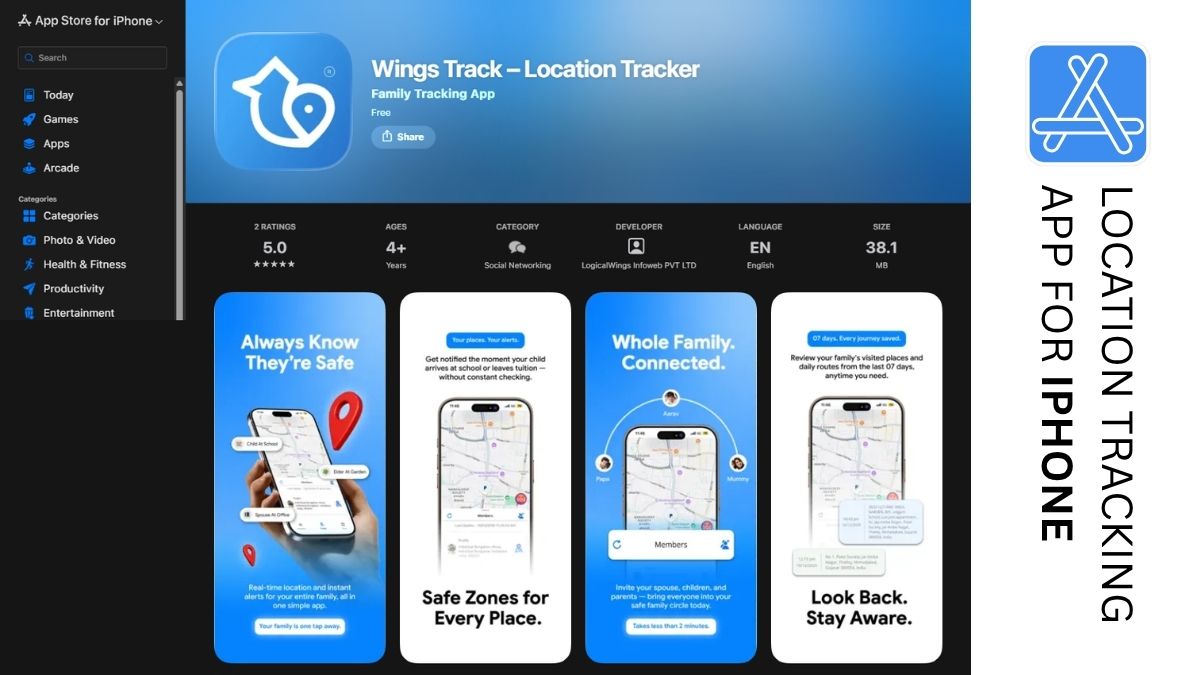
Wings Track
- Parents can see a child’s device location in real time
- Works on Android; requires the child’s device to be set up under a family account
- Free
Life360
- Shows the live location of all family members on a shared map
- Includes driving alerts, crash detection, and check-in features
- Free tier available; paid tiers add more history and alerts
Find My Friends (Apple)
- Built into iOS, no third-party app needed
- Works across iPhones with mutual consent
For minors, location tracking by a parent or guardian is legal and expected. For adults, consent is required.
3. Carrier-Level Location Services
Mobile carriers can locate a device using cell tower triangulation and GPS data. This is not available to the general public, but there are two legitimate paths:
For emergencies: In India, dialing 112 connects to the national emergency response system. Law enforcement can request location data from carriers with proper authority.
Carrier family plans: Some operators (Jio, Airtel, Vi) have parental control or family locator add-ons as paid features. These require all devices to be on the same family plan and enrolled with consent.
4. WhatsApp Live Location
If the person you’re trying to reach uses WhatsApp:
- Open the chat → tap the attachment icon → Location → Share Live Location
- They choose a duration (15 minutes, 1 hour, or 8 hours)
- You see their real-time movement on the map during that window
This requires them to initiate the share voluntarily. You can ask someone to do this if you have a genuine reason a late-night pickup, a child walking home, or coordinating at a crowded event.
5. IMEI Tracking (Law Enforcement Only)
Every phone has a unique IMEI number. If a phone is stolen, you can file a complaint with police and provide the IMEI. Carriers can flag IMEI and, in coordination with law enforcement, trace which towers it’s connecting to.
In India, the CEIR portal (ceir.gov.in) lets you block a stolen phone using its IMEI after filing an FIR. This doesn’t give you a live map view — it blocks the device from working on Indian networks.
For actual location data from IMEI, only law enforcement with a court order can get that from carriers.
The Legal Side
Tracking someone’s location without their knowledge or consent is illegal in most countries. In India, it can fall under the IT Act (unauthorized access to a computer resource) and the Indian Penal Code (stalking).
The only legal scenarios for non-consensual tracking are:
- Parents tracking minor children
- Law enforcement with proper authorization
- Employers tracking company-owned devices with prior disclosure to employees
If you’re trying to track an adult without their knowledge, a partner, an ex, a stranger that’s surveillance, not safety.
Quick Reference
| Method | Real-Time | Requires Consent | Works On |
| Wings Track | Yes | Yes | Android, iPhone |
| Life360 | Yes | Yes | Android, iPhone |
| Google Maps location sharing | Yes | Yes | Android, iPhone |
| Apple Find My | Yes | Yes | iPhone only |
| Carrier family locator | Yes | Yes (enrollment) | Varies by carrier |
| “Track by number” websites | No | N/A— these are scams | N/A |
The tools that work all have one thing in common: the person being tracked knows about it. That’s not a limitation, it’s the design. Real-time location sharing is a coordination tool, not a surveillance tool. The moment you need to hide it, you’re in legally and ethically uncertain territory. If you’re trying to stay connected with family, every major platform already has this built in and it takes five minutes to set up.