Will This App Work Internationally?
For millions of families, distance isn’t theoretical. One parent works in another city. A child studies abroad. A spouse travels internationally for work. Family members are spread across countries and time zones.
The question most families forget to ask before downloading: Does this app maintain location sharing when a family member crosses a border?
The technical answer is that GPS is a global satellite system that doesn’t recognise national boundaries. But location-sharing apps depend on cellular data or Wi-Fi connectivity to transmit location information. When a family member travels internationally and switches SIMs, activates roaming, or experiences connectivity gaps, the app’s behaviour varies significantly depending on how it’s built.
For families managing real international distance, not occasional travel but ongoing separation across borders, this question moves from nice-to-know to essential. An app that works well domestically but loses reliability at borders provides a false sense of security for exactly the situations where accurate information matters most.
Have You Had the Conversation With Your Family?
This is not a technical question. It is the most important one on this list.
No family locator app works well long-term when it’s installed without discussion, discovered rather than disclosed, or experienced as monitoring rather than mutual safety. The families who use these tools successfully, where the app actually reduces anxiety and strengthens connection rather than generating resentment, share one consistent feature:
Everyone in the circle knows they’re in it and understands why.
For young children, the conversation is simple: “This helps me know you’re safe so I don’t have to call you all the time.” Most children under 12 accept this without resistance when it’s explained calmly.
For teenagers, the conversation requires more. It needs to acknowledge their developing independence, explain the specific concern the app addresses, and ideally make the arrangement of mutual parents’ locations visible to teenagers as well as the reverse. Reciprocity changes the entire dynamic from surveillance to shared awareness.
For adult family members an elderly parent, a spouse, a college student the conversation is a request, not an instruction. “Would you be comfortable if we could both see each other’s locations? It would help me worry less without me having to call constantly.” Most adults, when approached with genuine vulnerability rather than authority, say yes.
The practical checklist before installation:
- Has every family member who will be in the circle been told about the arrangement?
- Does everyone understand what information is shared and who can see it?
- Is the arrangement mutual so children and teenagers see parents’ locations as well?
- Has everyone agreed voluntarily rather than been enrolled without their knowledge?
A family locator app installed with these five questions answered devices confirmed, free tier tested, privacy policy read, international function verified, and the conversation completed is a tool your family will actually use. One installed without this groundwork is an app that gets disabled, worked around, or abandoned within weeks.
Technology is the easy part. Always has been.
What does the family locator app do?
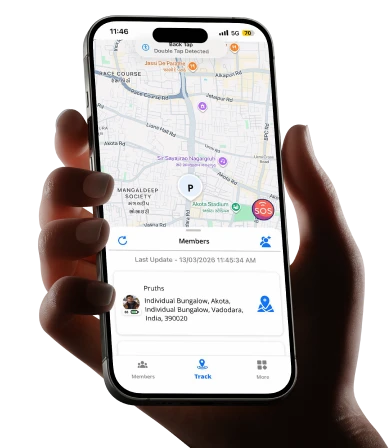
A family locator app helps family members stay connected through live location sharing. It can show real-time location, safe arrival alerts, travel updates, and emergency support when needed. It’s especially helpful for parents with teenagers, elderly care, or families living in different cities or countries.
What is the best app for family locator?
The best family locator app is one that feels easy, reliable, and respectful of privacy. Families usually look for accurate live tracking, low battery usage, emergency alerts, and Android + iPhone support. Apps like Wings Track are designed for everyday family safety instead of complicated monitoring.
How do I track my child’s location for free?
You can use location-sharing features available in family tracking apps or even Google Maps. Most apps offer a free version with basic live tracking. The important thing is having your child’s permission and setting it up openly so it feels safe and trustworthy for everyone.
Is the family locator app legit?
Yes, legitimate family locator apps are commonly used by parents, caregivers, travelers, and families worldwide. Trusted apps use GPS and location permissions approved by the user. A genuine app should clearly explain privacy settings, permissions, and how data is used.
How do I track my wife’s phone location for free?
Location tracking should always happen with consent and transparency. Many couples use family locator apps to stay connected during travel, work commutes, or emergencies. Both partners can choose to share live locations with each other for safety and convenience.
How can I track another mobile location?
The safest and most ethical way is through a shared family tracking app where both users agree to location sharing. Most apps allow you to invite family members into a private group and view live locations securely.
How do I check my partner’s location?
You can use location-sharing apps where both partners voluntarily share their location. This is helpful for long-distance relationships, travel safety, or daily coordination. Healthy location sharing should always come from mutual trust, not control.
Can I track my son’s phone location?
Yes, parents can track their child’s phone location through family safety apps after setting up permissions on the device. Many parents use this for school travel, outdoor activities, tuition timing, and emergency situations.
Does It Actually Work on Everyone’s Device?
This is the question most families skip and the one that causes the most frustration two weeks after installation.
Your family is not brand-homogeneous. One person has an iPhone. Another has a budget Android. Your teenager specifically chose Samsung because their friends have Samsung. Your spouse has a company-issued phone they didn’t pick themselves.
Before downloading any family locator app, ask this specifically: does it work equally well on both Android and iOS? Not “is it available on both platforms” available and functional are different answers. Test whether the Android user and the iPhone user in your household have the same location accuracy, the same notification reliability, and the same update frequency.
An app that works beautifully on one platform and tolerably on another is not a family safety tool. It’s a tool for part of your family.What to check: Download the app on two different devices one Android, one iPhone before committing. Walk a known route and compare how each device displays the other’s location. The gap between them tells you everything about real-world cross-platform performance.
What Does “Free” Actually Include?
Every family locator app claims to be free. Almost none of them are free in the way that matters.
The question is not whether the app is free to download. It is:
Which features are free, and which ones sit behind a paywall?
Specifically ask:
- Does real-time location update without payment, or does the free tier throttle updates to every 10-15 minutes?
- How many family members can join the circle for free?
- Do arrival and departure alerts work on the free plan?
- Is location history accessible without a subscription?
An app that updates location every 15 minutes is not real-time tracking. It is a historical record with a delay, which is functionally different in the moments that actually matter, like knowing your teenager is driving home safely or your child has left school.
The honest test:
Use the free tier for one full week across your family’s actual daily routine before deciding whether paid features are necessary. If the free experience is genuinely functional, the app is honestly free. If you hit paywalls before accomplishing the basic purpose you downloaded it for, the free tier is a marketing entry point, not a real offering.
What Does This App Do With Our Location Data?
This question makes people uncomfortable because it feels technical and paranoid. It is neither. It is the most important privacy question you will ask about any app that tracks your family’s physical movements 24 hours a day.
Your family’s location data, home address, school location, workplace, daily routine, weekend patterns, places of worship, and medical appointments are extraordinarily sensitive personal information. Some family locator apps have documented histories of selling this data, in anonymised form, to third-party data brokers and advertising networks.
“Anonymised” does not mean untraceable. Research has consistently demonstrated that location data can be re-identified even after anonymisation, because the combination of home location, workplace, and daily routine is unique to specific individuals.
Before installing any family locator app, read the privacy policy specifically for:
- Language about third-party data sharing
- References to data broker relationships
- Statements about selling or licensing anonymized location data
- How long is location history retained, and who can access it
Vague language in these sections is itself an answer. A company that is clear about not selling your family’s location data will say so explicitly and specifically, not in language that leaves interpretive room.
The standard worth applying:
Would you be comfortable if your family’s daily location patterns were visible to companies you’ve never heard of? If not, the privacy policy of the app you’re considering should explicitly prevent that outcome.
How can I find my husband’s location on an Android phone?
Android phones support live location sharing through apps like Google Maps and family locator apps. Once location sharing is enabled with permission, you can check live updates, travel routes, and safe arrival notifications directly from the app.